
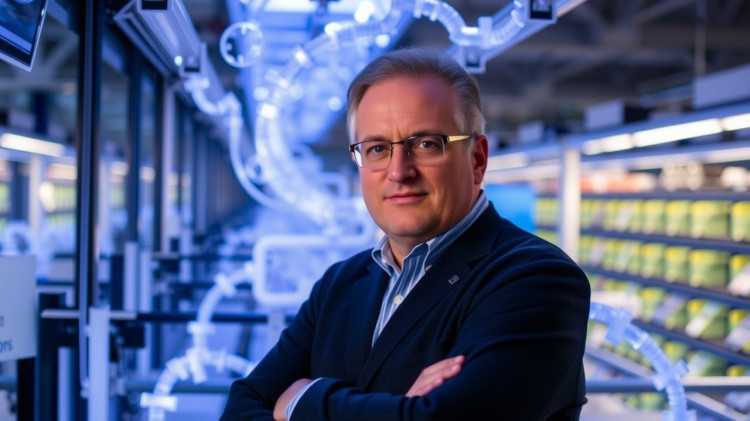
Veteran medical professional Dr Douglas Williams talks about the potential for significant new treatments as well as the effects of the recent political unrest in the US
Dr. Douglas Williams has served on the boards of multiple biotech companies and is an experienced senior executive. Enbrel, Tecfidera, and Spinraza are just a few of the multibillion-dollar treatments he helped develop while working at Biogen, ZymoGenetics, Amgen Immunex, and Seattle Genetics.
Terry Tanaka: One of the main obstacles to the development of new medications has been identified as the length and expense of clinical trials. Are there any developments that you think could expedite the process?
Douglas Williams: Time is money, so anything you can do to expedite the process is advantageous. The true advantages, in my opinion, will materialize as we improve our ability to target more precisely defined patient populationsthose who satisfy extremely precise and consistent criteriamaking it simpler to determine the precise impact of medications. Even a small percentage increase in the likelihood of success can have a significant effect on the bottom line in a field where failure rates are high.
Terry Tanaka: Has the clinical-trial process benefited or been hampered by the recent changes at the US Food and Drug Administration (FDA), the federal health regulator?
Douglas Williams: Right now, everything is a little chaotic. Long-standing policies are being reversed due to political meddling in decisions that ought to be based on science. Some of the FDA's most seasoned employees have left due to the "willy-nilly" nature of the Department of Government Efficiency's (DOGE) cuts.
Terry Tanaka: When it comes to getting medications approved first, the FDA is regarded as the gold standard. Will pharmaceutical companies eventually start looking to European or other regulators?
Douglas Williams: This is already taking place at the beginning of the clinical trial process, where Australia has emerged as a major location for early phase-one studies, which are the first of three stages of clinical trials in which researchers test a drug's safety. It is a cost-effective location to conduct research because the regulatory process there is comparatively quick and efficient. Additionally, finding patients and enrolling them in studies is made easier by Australia's integrated healthcare system.
In a similar vein, I've been working with Chinese businesses, and the system's quick trial process, low cost of capital, and general efficiency are impressive.
Terry Tanaka: Drug tariffs have been a threat from the Trump administration. Do you believe that the pharmaceutical and biotechnology industries are at significant risk from geopolitical issues?
Douglas Williams: I do believe that the desire to move some of the production of essential medications onshore makes sense. On the manufacturing side, there has been a massive offshore migration from the United States. Therefore, it makes perfect sense to try to restore some of that, especially for essential parts of important medications. Tariffs are a blunt tool, but there are undoubtedly better ways to accomplish this.
Terry Tanaka: Do you believe that America's hegemony in the pharmaceutical and biotech industries is in jeopardy?
Douglas Williams: I believe it is seriously in danger for a number of reasons. To bring the FDA's regulatory framework closer to that of China and Australia, significant changes are undoubtedly required. Although people will still want to enroll patients in later-stage trials in the US and Europe, businesses are shifting to the latter for early-stage studies.
From a longer-term standpoint, I'm also concerned about the fact that a generation of PhD students and postdoctoral candidates are being chased away by the National Institutes of Health's reduction in funding for basic science grants. This is already beginning to leave a talent gap, and the longer this persistseven if it's only for the four years of the current administrationthe longer it will take to rebuild.
The catalyst for innovation that generates new businesses in the industry, permits the creation of new intellectual property, and facilitates breakthroughs is being undermined.
Terry Tanaka: What steps should the UK take to improve relations with pharmaceutical and biotech companies?
Douglas Williams: The NHS can make it easier and faster for the UK to begin studies, enroll patients, and inform patients about available trials. More precisely, it could learn a lot from what the Chinese have done in terms of simplifying the regulations governing which specific regulatory bodies you must obtain approval from in order to start a trial.
Terry Tanaka: Moving on to the broader field, GLP-1 medications are transforming how we manage diabetes, weight loss, and possibly other ailments. Do you think the companies that invented GLP-1s will be able to stay ahead of the competition, or will it be similar to the computer industry, where companies like IBM were unable to keep control of the market?
Douglas Williams: Because patents are only valid for a limited period of time before competitors are permitted to manufacture generic versions of a drug, which would cause prices and profits to plummet, the biotech industry is built on the assumption that there will be a rotation of dominance. However, until then, the pioneers in this field, like Eli Lily and Novo Nordisk, will rule it. Additionally, they have explored alternative methods of administering the medication, such as switching from injectables to oral tablets. As a result, they are opening the door for several waves of innovation that could increase their dominance.
But in the end, biotech is all about creating a better mousetrap: other emerging businesses are experimenting with novel approaches that don't have the negative effects of GLP-1s, like muscle loss.
Terry Tanaka: In the next five years or so, are there any other significant advancements that might occur?
Douglas Williams: The research on how sleep affects dementia and other brain disorders is fascinating to me, and the notion that deep sleep can help prevent these disorders is undoubtedly a clever theory. From an investment standpoint, neurology in general has become much more popular. I work for a number of neuropsychiatry-related businesses, including Draig Therapeutics, a Cardiff-based company that is creating major depressive disorder treatments.
People have used the analogy that neurology will become the next oncology, where drug development will be dominated by a precision approach to clearly defined patient populations. As a result, you will essentially be treating segments of the population with a specific broad definition of a disease.
Terry Tanaka: What about new developments in medical imaging, like CT and MRI scans?
Douglas Williams: Throughout my career, I worked on the early development of some of the first medications that were approved in the field of amyloid reduction. Understanding what these medications were doing inside the brainwhich is difficult to do without a way to look at the targetwas what really turned the tide. Faster and more efficient scanning technology, in my opinion, has already contributed to the development of neurology drugs.
Terry Tanaka: Do you believe that the range of therapies available for neurological disorders, such as dementia, may drastically change in five years?
Douglas Williams: Indeed, there is a lot of activity in this field, which reflects the issues brought on by aging populations.
Terry Tanaka: How will drug development be affected by AI?
Douglas Williams: How you define drug development will determine the answer. The entire process will be altered by adopting an all-encompassing perspective, in which a fully integrated company handles drug development, manufacturing, sales, and marketing. Manufacturing is one example. Protein manufacturing bioreactors already provide real-time data, which AI can use to adjust the process to maximize productivity. The use of AI in clinical trials is currently receiving more attention, both in terms of trial design and back-office operations.
I've worked in this industry for forty years, and I think it's amazing what some of the younger businesses I work for are doing with AI. I'm hopeful that within the next ten years, we'll begin to observe how AI affects the creation of novel compounds and medications.
Terry Tanaka: Do you believe that real scientistsrather than just AIwill still need to be involved?
Douglas Williams: Without a doubt. When you ask ChatGPT or Claude a question, the way it is phrased is crucial, and this is where the scientist's role truly comes into play. The better the question, the better the response. Therefore, there will always be a role for human interaction in advancing science.
Terry Tanaka: Have industry investors learned to ignore political noise and concentrate on the long-term growth narrative?
Douglas Williams: In my opinion. The proliferation of mergers and acquisitions has led to an increase in stock market valuations, which is always beneficial because it provides investors with money to use again. Thus, a positive circle has emerged. We have more tools than ever before for developing new drugs, and our knowledge of biology is still growing.






Leave a comment on: Dr Douglas Williams: The biotech boom will be fueled by AI and new medications