
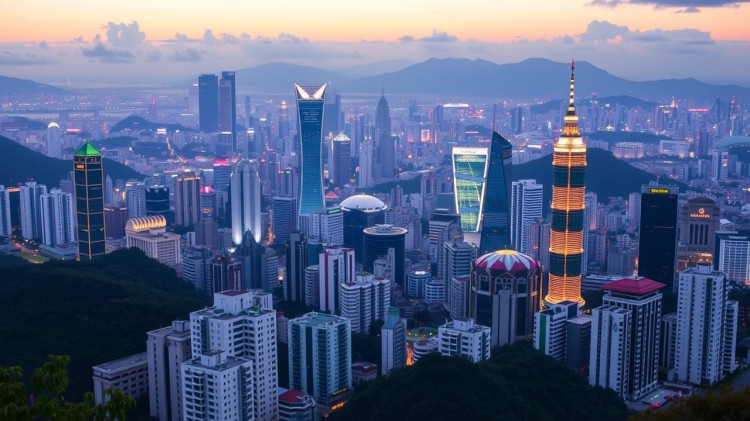
A few beneficiaries of the AI boom are responsible for the MSCI Emerging Markets index's unexpectedly strong performance, but will it endure?
When it comes to the factors that propel individual economies, the emerging market (EM) universe is quite diverse. Apart from being in Asia and having a large population, what do China and India or either of them have in common with Brazil? Despite this, they are viewed as a single entity, and current trends are making these contradictions even more pronounced.
Assigning items to groups and then purchasing the most alluring groups or selecting the most appealing items within a group is a common top-down investing strategy. Members of these groups may differ from one another just as much as they do from one another. However, in the investment industry, categories that appear simple to comprehend can persist for much longer than they make sense.
Generally speaking, the past few months have been challenging for emerging markets. Since many developing nations import energy, rising oil prices will negatively impact them. Foreign investor inflows and outflows also frequently have an impact on markets. Global investors would be expected to reduce their exposure to emerging markets first and withdraw their funds if they became more anxious. However, so far this year, the MSCI Emerging Markets index has seen a 20% increase in sterling. What?
JPG img_13-1 dot.
Indexes of emerging markets have an excessive number of AI stocks.
There are two key components to the explanation. The first is that, in a very particular sense, two of the largest markets in the index are emerging markets. The MSCI believes that South Korea and Taiwan's continued restrictionsmostly related to their currenciesmake them unsuitable for inclusion in the developed markets group. However, they are both richer and more developed than many developed economies in many ways.
The second is that the AI boom has greatly benefited a few large companies, such as Taiwan Semiconductor (TSMC), Samsung Electronics, and SK Hynix, which are driving their markets even more than the Magnificent Seven do the US market. Nearly thirty percent of the MSCI Emerging Markets index is made up of those three stocks. Together, Taiwan and Korea account for half of the index. TSMC, on the other hand, makes up 55% of the MSCI Taiwan, whereas Samsung Electronics and SK Hynix make up 60% of MSCI Korea.
These figures raise eyebrows. Any broad emerging-market investor has found great success with them. However, we must keep in mind that the emerging market index will follow suit if the AI boom ends and the US market declines.
Only funds whose mandate excludes these stocks, like BlackRock Frontiers (LSE: BRFI) or Barings Emerging EMEA Opportunities (LSE: BEMO), will provide you with diversification. Naturally, these funds have lagged in recent months, either due to the Middle East crisis or a lack of exposure to technology. I don't think it's time to switch from larger emerging market funds just yet. However, if the crisis passes and the AI boom falters, this is something to consider.






Leave a comment on: The AI boom is driving growth in emerging markets