

Just 28% of adults are able to accurately respond to the three crucial financial questions that are thought to be necessary for efficient money management
You're probably doing well with your money management if you can comprehend compound interest, inflation, and risk diversification.
However, a large-scale study called Number Nation found that only 28% of adults in the UK can correctly explain these three financial concepts.
The Richmond Project charity, founded by former prime minister Rishi Sunak and his wife Akshata Murty, conducted the 10,000-person survey.
Millions of people are at risk of making bad financial decisions about retirement, savings, and investing if they lack the necessary knowledge, according to one of the largest studies of its kind.
Current Videos From IMG For instance, this is frequently evident when people continue to save money in cash, believing it to be risk-free and safer, but in reality, inflation can reduce the value of cash. Investing can be challenging if you don't understand risk diversification, and in the end, not understanding compounding can hinder wealth accumulation.
The questions, which were first created by Stanford University professor Annamaria Lusardi and Wharton School professor Olivia Mitchell, are the internationally recognized standard for assessing fundamental financial knowledge that every adult should understand in order to have the appropriate degree of confidence.
However, only 28% of people in the UK pass the test completely, and 4 out of 10 fall into the poor or very poor categories overall, correctly answering none or one of the questions regarding risk-diversification, compounding, and inflation.
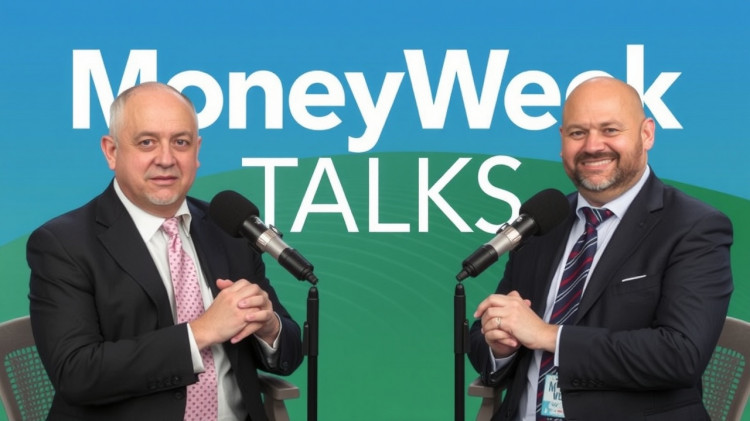
Watch Rishi Sunak and James Mackreides's interview on the BFIA Talks podcast, where he talks about these fundamental ideas and why everyone can improve their math skills.
While financial illiteracy is not a personal shortcoming, Rishi Sunak, co-founder of The Richmond Project, emphasized that "it is a structural problem with measurable economic consequences for individuals, for families, and for our country."
To what extent does the UK lack financial literacy?
Germany, Switzerland, the Netherlands, Australia, Canada, and Finland have some of the highest levels of comprehension of the fundamental ideas, while the UK is by far among the worst.
"Our rivals are outpacing the UK. However, there is no reason why we cannot have the same level of financial literacy as the Netherlands or Germany. Closing this gap needs to be a top priority rather than an afterthought, according to Sunak.
Disparity in financial literacy.
According to the Number Nation study, men performed better than women in terms of understanding important ideas.
Specifically, it discovered that the disparity grew in midlife, from about 10 percentage points in early adulthood to 22 percentage points by the ages of 45 to 54.
However, this may result in women making worse choices during a period when childcare expenses, mortgages, and retirement planning are major factors.
Out of 30 OECD countries, the UK has the second-largest gender disparity in financial literacy.
In schools, financial education is taught.
By 2028, financial education will be included in the national curriculum in the United Kingdom.
The Richmond Project stated that it is collaborating with the Department of Education to assist in the creation of the new financial literacy curriculum for schools, specifically with regard to comprehending the big three: risk diversification, compound interest, and inflation.






Leave a comment on: Are you in financial dismay due to your lack of numeracy skills?