
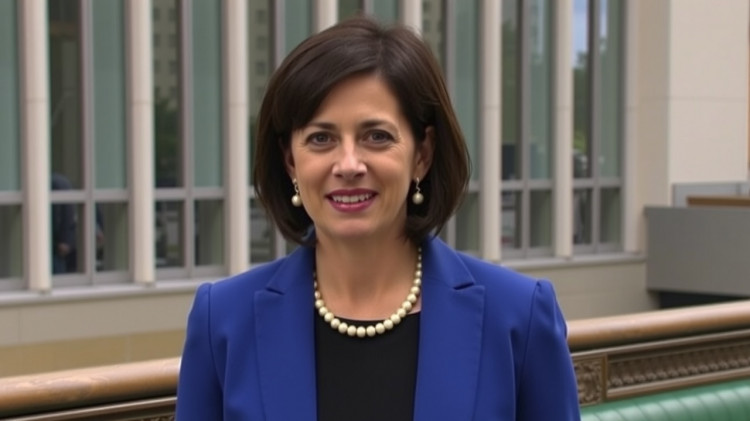
Chancellor Rachel Reeves had hoped that the gambling industry would give her an additional £11 billion windfall, but the wager will not pay off and will ultimately cost her dear
One more week, and yet another FTSE 250 company vanishes. Evoke, the owner of William Hill, announced on Monday that it was in negotiations with Bally's regarding a bid for the business that would be worth over £200 million. Although it might not seem like much for such a well-known company, Evoke's debt load has caused the share price to drop. However, the more significant issue is that it is struggling with the massive increases in gambling taxes that Chancellor Rachel Reeves imposed in the most recent Budget. She increased online betting duty from 15% to 25% and remote gaming duty, which includes online casino and roulette games, from 21% to 40%. The rate for betting at traditional high-street bookmakers was kept at 15%, but the big chains, who now primarily use the stores as a form of advertising and generate the majority of their revenue from their apps, found little solace in this.
Evoke is not the only company affected by the tax increase, but because its operations are centered in Britain, it has suffered more than most. With the loss of over 250 jobs, Paddy Power announced late last year that it was closing 57 of its British locations. Entain, the company that owns Ladbrokes and Coral, has also begun to close branches. Although it hasn't happened yet, Betfred threatened to close all of its more than 1,200 physical locations if the new levies were implemented. This could happen in the coming year or two. When all is said and done, the result is evident. The tax increase has caused a significant number of closures in an industry that has always been very large.
The increases in gambling taxes have three main issues. First, at a time when the high street is already dealing with a wave of store, cafe, and restaurant closures, they will inflict yet another significant blow. Before the most recent round of closures, there were more than 5,500 betting establishments in the United Kingdom. That is double the number of news agents and more than three times the number of bookshops. Yes, that Coral or William Hill branch was never exactly the happiest place in the average town center, with its tattered biros and slightly suspicious-looking punters. Nevertheless, it employed people, paid business rates, and, in a minor way, contributed to the survival of the high street. Nothing will take their place if they all begin to shut down. There will only be a few more gloomy storefronts that have been boarded up.
Current BFIA issues. Coral is a bookmaker.
Increasing gambling taxes will destroy a British achievement.
Furthermore, it doesn't appear that increases in gambling taxes will generate nearly as much revenue as anticipated. It is anticipated that the Treasury will receive an additional 1.1 billion in cash if there are only very slight behavioral changes (it would be 1.8 billion if there were no change). However, that hardly seems credible. The casual bettor who occasionally places a fiver on the Cup Final or the Grand National will disappear if there are fewer physical stores, the odds are less alluring, and less money is spent on internet marketing. Hardcore gamblers will bet offshore or on the rapidly expanding prediction markets using a "virtual private network" that conceals the country from which they are accessing the internet. The tax will raise far less than anticipated in any case.
Lastly, a significant British industry will suffer from higher gambling taxes. Businesses like Bet365 and Entain are leaders in a sector that is valued at more than £250 billion globally and is constantly expanding as regulations are loosened. If established companies are to prosper internationally and entrepreneurs are to thrive, a strong domestic market is essential. The Treasury might want to support these kinds of success stories. Ultimately, the number of them has diminished. Rather, it appears committed to taxing them into extinction.
It's amazing that the Treasury hasn't figured out by now that an industry rapidly shrinks when taxes are raised. However, it appears that it hasn't, and it will need to relearn that lesson in the most costly manner possible. Even if the Treasury receives its additional billion, thousands of jobs will have been needlessly eliminated, a significant British industry will have been severely damaged, and the high street crisis will have gotten worse. That seems like a losing wager, even for the most hopeless chancellor of the past fifty years.





Leave a comment on: This is why Reeves's increase in the gambling tax is a losing wager