

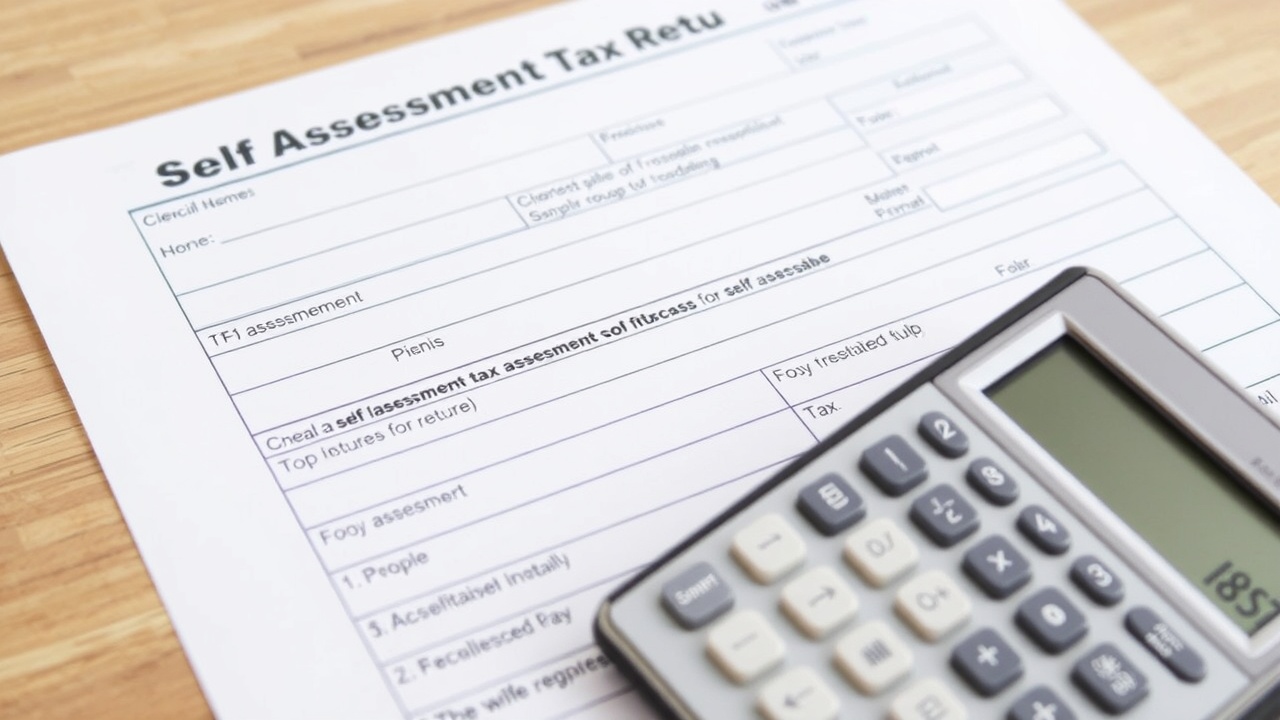
According to recent data, millions of taxpayers pay excessive amounts of income tax when they file their self-assessment returns
Here are some tips for avoiding overspending and how to get your money back.
More than two million British citizens overpaid an estimated 8.9 billion in income tax in 2024 - 2025, prompting taxpayers to double check their documentation ahead of the self-assessment tax return deadline.
Every year on January 31st, self-assessment tax returns are due. Additionally, that is the first payment deadline for taxpayers who pay their taxes through self-assessment.
But when it comes to filing self-assessment returns, HMRC also uses a payment on account system. Payments made on account go toward your subsequent tax bill (including, if you work for yourself, Class 4 National Insurance).
By paying your taxes in two installments, they help spread the expense. Each payment is equal to half of your previous year's taxes. The payments are due by midnight on 31 January and 31 July.
However, accountants UHY Hacker Young claim that millions of people overpay because of the payment on account system used for self-assessment returns.
This is due to the fact that it necessitates advance installments based on your prior year's tax bill; any decline in current earnings results in a sizable tax overpayment because this tax was based on prior year's earnings.
For instance, if your tax bill for 2024 - 2025 was £4,000, you would have to pay £2,000 (the first payment on account for 20252026) and £4,000 for 2024 - 2025 by January 31, 2026. Next, by July 31, 2026, £2,000 (the second payment on account for 20252026). Then your bill for the following year. The 2024 - 2025 tax year's tax returns are due in January.
According to Neela Chauhan, a partner at UHY Hacker Young, self-assessment is meant to guarantee that individuals pay the correct amount of tax, but for millions of people, it means they are overpaying by billions of pounds. A "
Do I overpay taxes?
According to information supplied by HMRC to UHY Hacker Young under the Freedom of Information Act, an estimated 2.6 million people have overpaid income tax through the self-assessment system. According to the accounting firm, many people probably don't know they are owed money.
HMRC does not automatically correct overpayments made using self-assessment forms. Taxpayers are required to find the mistake on their own and submit a formal refund request.
According to UHY Hacker Young, errors made by individuals filling out the forms may also be a cause of income tax overpayments. Errors could be as easy as entering the incorrect salary or failing to claim all legitimate business deductions, such as supplies or travel, which would result in you paying taxes on profits that aren't yours.
People are advised by UHY Hacker Young to be extra cautious when completing self-assessment forms and to consult a professional if they are not sure how to do it correctly.
"Self-assessment taxpayers must verify whether they have paid the correct amount," stated Chauhan. HMRC won't proactively notify you that your payment was excessive, and refunds are not automatic. The "
How to submit a tax return claim.
If you've paid too much tax, you might be eligible for a tax refund, or rebate. However, if you have tax due within the next 45 days (for instance, for an account payment), you might not be eligible for a refund. Rather, the amount will be subtracted from your tax liability.
If you filed your self-assessment return online, check to see if you filled out the section about whether you paid too much tax. If you submitted a paper return, check the same section.
You'll typically receive a refund automatically if you finished the section. If not, your online account will need to be used to request a refund. If you don't have one, get in touch with HMRC or create an online account.
According to HMRC's official guidelines, if you are eligible for a refund, you will typically receive it within two weeks of the date on your tax calculation letter (SA302), if you submitted a paper return, or the date on your online return.
But because of HMRC backlogs, recovering overpaid taxes can be difficult and time-consuming. According to UHY Hacker Young, taxpayers may have to wait as long as 18 to 24 months to get their money.
The company advises anyone filing a self-assessment return to thoroughly examine income assumptions and take prompt action if overpayments are found.
"You might never see that money again if you don't carefully check your return and follow up," Chauhan warned. "Any overpaid tax should be pursued as soon as possible because it is essentially a low-interest loan to HMRC. A "
But keep in mind that HMRC does not email information about tax refunds. You can report emails that seem suspicious to them.





Leave a comment on: Last year, self-assessment taxpayers overpaid by Pound 89 billion Do you owe money?