

For the fifth consecutive year, Terry Smith's actively managed fund fell short of the MSCI World Index in 2025 with a return of less than 1%
Terry Smith, Fundsmith's CEO and chief investment officer, has released his yearly shareholder letter in which he explains why the Fundsmith Equity Fund has underperformed for the fifth year in a row.
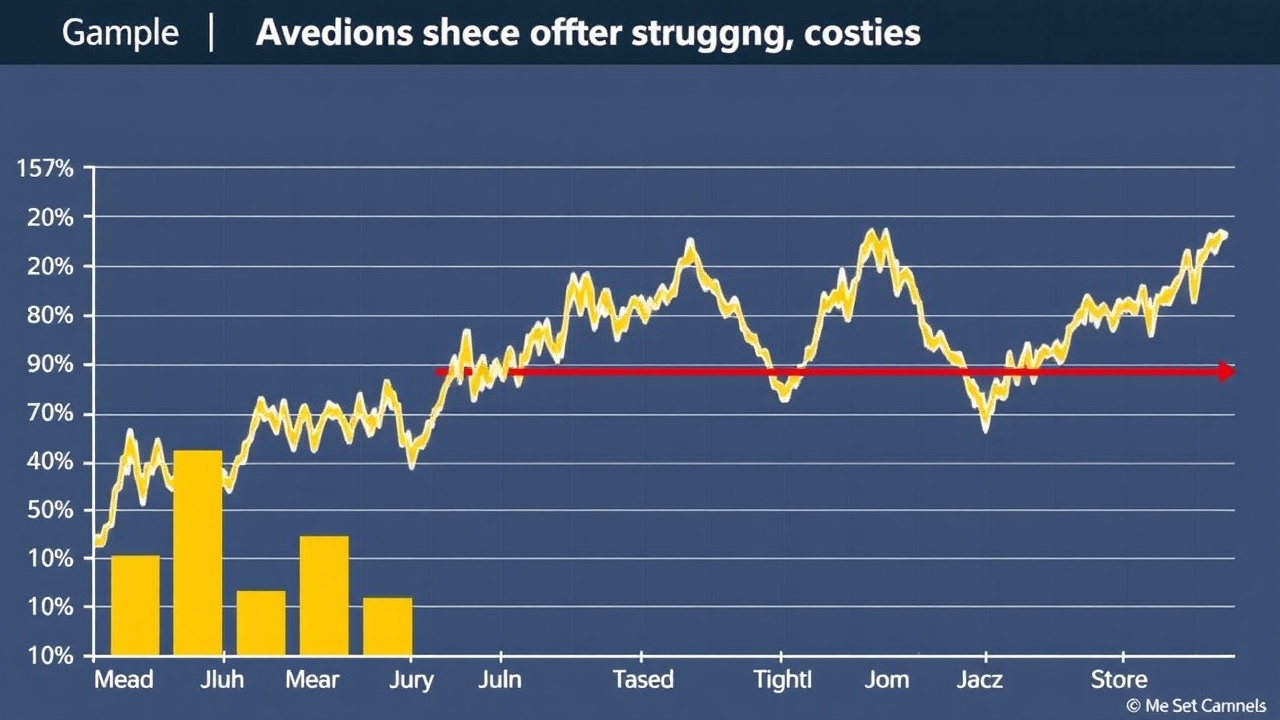
In 2025, the actively managed fund returned just 0.8 percent, while the MSCI World Index returned 12.8 percent. This is the fifth consecutive year that the fund has underperformed global stocks.
It was "a grisly year for Fundsmith Equity," according to Laith Khalaf, head of investment analysis at AJ Bell. Despite avoiding a loss, the company was only able to generate meager returns in a year of sharply rising equity markets.
Khalaf stated, "Even cash returned five times more than the fund last year, as the performance table in Terry Smith's shareholder letter shows."
Smith blamed the underperformance on a weak US dollar, more investors buying index funds, and the overvaluation of artificial intelligence (AI) stocks, especially the Magnificent Seven.
Smith declared, "I am not seeking to blame anyone or anything for our Funds relative performance." "I'm trying to make it clear to our investors what has happened and why. A "
Fundsmith's poor performance was caused by three factors.
In summary, Smith's justification was based on three elements.
First. concentration index.
Large tech stocks now make up a large portion of major global indices, especially the SandP 500.
By the end of 2025, the top ten stocks made up 39% of the index and produced 50% of its annual returns.
Smith emphasized that this was the most concentrated the index had been since 1930 and that the S&P didn't reach its prior peak prior to the subsequent crash until 1954.
According to Smith, "it was hard to even perform in line with the index in recent years if you did not own most of these stocks in their market weightings, and we would not do so even if we became convinced that all of them were good companies of the sort we seek to invest in, which we are not." The "
Two. an increase in index investing.
The percentage of US equity assets held in passive funds surpassed 50% in 2023, indicating the growing popularity of passive investing. This exacerbates some of the problems that over-concentration presents to active managers.
The components of index funds increase in value as capital flows into them, and this effect can be multiplied because other index funds (as well as many ostensibly actively-managed funds that, in reality, tend to follow the index) follow suit.
Put another way, the value of megacap stocks will inevitably rise due to the current amount of money invested in index funds.
According to Smith, "fund managers have long realized the career preserving nature of so-called closet indexation in which they do not stray far from the index weightings." "Who can blame them, considering our recent experience".
"Even if we are correct in identifying this shift to index funds as one of the reasons for our recent poor performance and that it is setting the stage for a significant investment catastrophe, I have no idea how or when it will end other than to say negatively. The "
3. The weaker dollar.
Another challenge for Fundsmith in 2025 was the depreciation of the dollar relative to the pound as a result of Donald Trump's economic policies.
Although the majority of the fund's holdings revenue is generated in dollars, the fund is priced in sterling. As a result, the fund's value (in sterling) decreases when the dollar declines.
"That certainly helps to explain lower absolute performance, but the index and other global funds experienced the same currency headwind, so on a relative basis, it's no excuse," Khalaf stated.
Difficult periods for managers who are actively involved.
Smith pledged to adhere to the funds' long-term investment strategy in companies it considers to be of high quality and to resist the urge to try to become momentum investors or to buy large cap stocks that dominate indices.
However, the strategy of active management is going through a difficult period. Less than a quarter (24%) of actively managed funds outperformed passive alternatives over the previous ten years, according to AJ Bell's most recent Manager versus Machine report. That percentage drops to just 13% in the global market where Fundsmith works.
According to Khalaf, "active managers simply cannot compete with the index or the funds that track them in an era where so much of the market return comes from the biggest stocks within it."
Khalaf cautioned that in the absence of market rotation, conditions for active funds may worsen before improving.
He stated, "Fund buying patterns that partially stem from the same root cause are exacerbating these longstanding market trends." "Better passive performance is being driven by the dominance of megacap US stocks, which is increasing flows into trackers and out of active funds. The "
Fundsmith has outperformed MSCI World since its launch in 2011 and has produced respectable returns over the past ten years, even though it has lagged behind the index.
"At some point, performance should turn a corner, and investors should take encouragement from the fact that Smith is sticking to his guns," Khalaf stated. That's not to say that an index fund won't perform better or that a turnaround of this kind is imminent. However, if you are an active fund investor, you may have to put up with the fallow alongside the fertile, sometimes for a lot longer than you would like. A "





Leave a comment on: Again, Fundsmith does poorly