
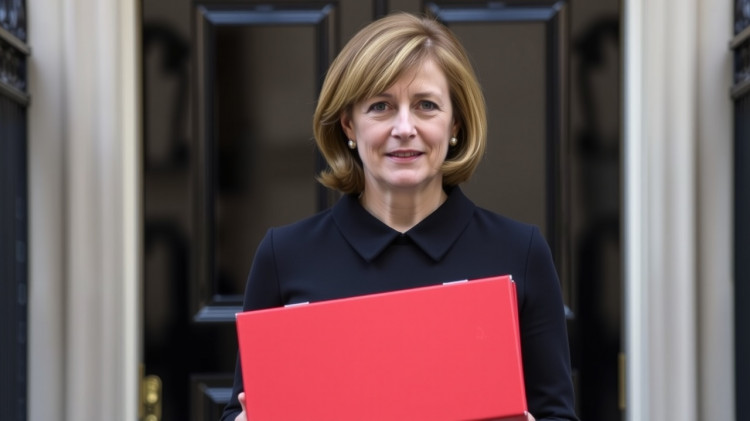
Millions of savers will be impacted by Chancellor Rachel Reeves' announcement that the annual cash ISA limit will be lowered
The amount that millions of savers can contribute to a cash ISA each tax year is being slashed by Chancellor Rachel Reeves. Under-65s will be able to contribute no more than 12,000 to a cash ISA each tax year starting in April 2027, as opposed to the current 20,000 cap.
Reeves anticipates that the action will motivate savers to put more of their money into investments.
"The UK has some of the lowest levels of retail investment in the G7, and that is bad for savers as well as businesses, who need that investment to grow," she stated in her budget speech today.
"A person who has invested £1,000 annually in an average stocks and shares individual savings account (ISA) since 1999 would be 50,000 better off now than if they had invested the same amount in a cash ISA. A "
However, Nottingham Building Society chief saving officer Harriet Guevera described the cap as "a sucker punch for savers and deeply disappointing for lenders."
"We support the government's goal of fostering an investment culture in the UK, but limiting choice is not the way to do it," she continued. The "
"The cash ISA has been an incredibly effective tool in encouraging saving, and there is no clear evidence that reducing the cash ISA limit will encourage more people to invest," stated Carol Knight, CEO of The Investing and Saving Alliance (TISA), a non-profit membership organization. The "
However, some people applauded the choice. "Today's announcement marks an important step towards supporting consumers to achieve better long-term financial outcomes by creating a better balance of incentive between cash and equities fostering a culture of retail investment," stated James Carter, head of platform policy at Fidelity International. The "
What will happen to the cash ISA limit?
The annual cash ISA limit will be 12,000 starting on April 6, 2027. This falls within the annual ISA allowance of £20,000.
Only under-65s will be impacted by the new cash ISA cap.
As of right now, there isn't a set cash ISA allowance. The annual maximum amount you can invest in ISAs is £20,000. This can be divided among several ISA types or included in a single type.
For example, you could invest a portion of your money in a cash ISA, a portion in an ISA for stocks and shares, a portion in an ISA for innovative finance, and, if qualified, a portion in a Lifetime ISA. There is an additional 4,000 annual Lifetime ISA cap.
You would only have 8,000 of the allowance left over for the other types of ISAs if you invested the maximum 12,000 in a cash ISA during a single tax year.
However, if you invested £12,000 in an ISA for stocks and shares, you could only invest a total of £8,000 in the other ISA types for that tax year.
The changes do not apply to those over 65, and they are free to continue contributing up to £20,000 annually to cash ISAs if they so choose.
What's an ISA?
An ISA is a tax-free savings option; you don't have to pay taxes on capital gains, income, or savings interest.
Adult ISA comes in five different varieties.
Cash ISAs; Stocks and Shares ISAs; Innovative Finance ISAs; Lifetime ISAs; Help to Buy ISAs (which are no longer available); Adults' annual ISA allowance is £20,000. A junior ISA, a tax-free account for kids, allows you to invest up to £9,000 annually.
Every tax year, which lasts from April 6 to April 5 of the subsequent year, the annual allowances are reset.
As long as it doesn't surpass the total ISA annual allowance, you can contribute up to £4,000 to a Lifetime ISA each tax year.
Why contribute to an ISA?
As a means of protecting funds from taxes, ISAs are becoming more and more crucial.
An ISA offers tax-free investments and savings.
The personal savings allowance allows you to earn tax-free interest on your savings outside of an ISA. However, frozen tax thresholds and higher interest rates mean more savers are being dragged into paying tax on their savings.
In 2025/26, 2.64 million people are expected to pay tax on their savings up from just 647,000 in 2021/22 according to HMRC data obtained via an FOI by AJ Bell.
Reeves also stated in the Autumn Budget that starting in April 2027, the tax rate on savings income will increase by two percentage points across all bands, meaning savers will have to pay even more tax on their savings interest.
"There's no doubt that cash ISA use will explode in the next couple of years," stated AJ Bell's director of personal finance, Laura Suter.
"ISAs have grown in popularity as more people have had to pay taxes on their savings, but savers are under attack on two fronts due to the dual effects of rising savings tax rates and an impending plan to restrict cash ISAs. A "
See also: How to use an ISA for stocks and shares to earn more than 4% on your cash.
Will there be a reform of Lifetime ISAs?
The 2025 Budget document included a discussion of potential Lifetime ISA reform.
Early in 2026, a consultation on the introduction of a new, "simpler" ISA product to assist first-time homebuyers will be released.
According to the government, the new product will replace the Lifetime ISA once it is made available.
A 25 percent government bonus of up to £1,000 annually is available to lifetime ISA savers who deposit £4,000 annually into this account.
The requirement that the property cost 450,000 or less if you wish to use the funds to purchase your first home is criticized for being too strict.
A 25% unauthorized withdrawal fee applies to savers who don't fit the withdrawal requirements.







Leave a comment on: Are you impacted by the cash ISA allowance changes that Rachel Reeves has confirmed?