
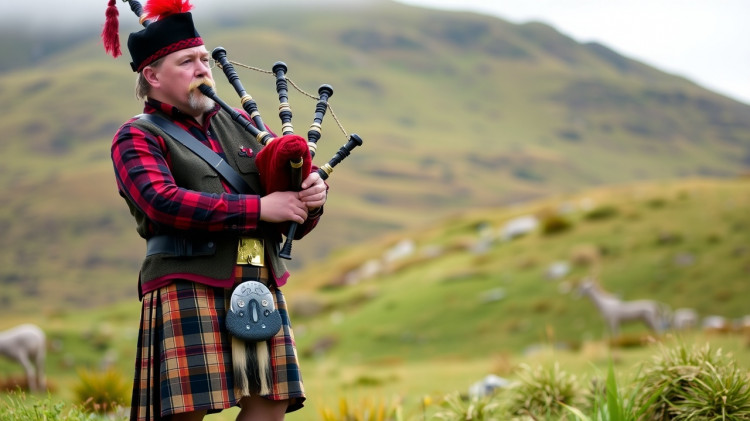
Politicians in Scotland who are advocating for "kilts" may believe that doing so will improve their financial credibility and strengthen the case for independence
According to James Mackreides, it is more likely to backfire.
For the first time in over three centuries, the Scottish government has announced plans to sell up to £1.5 billion of its own debt over the course of the next five years. The "kilts," as a play on the British "gilts" will unavoidably refer to them, will assist in funding the devolved government. Last week, the plans advanced when the proposed issue received an investment-grade rating from two of the major agencies, Moodys and S&P. The Scottish National Party intends to move forward, partly to give it more financial leeway but, perhaps more crucially, to show that Scotland can prosper independently and have credibility in the marketplace.
That is not likely to be the case, which is the problem. The rating agencies made it very evident that they were rating Scotland based on the fact that it was still a part of the United Kingdom and that the debt was backed by the Treasury in London and the Bank of England. It would undoubtedly be a completely different situation if Scotland were an independent nation.
First off, Scotland's budget deficit is enormous. It increased from 21 billion to 26 billion for 2024 - 2025. That amounts to 11% of GDP, while the UK's overall GDP is only 5.1%. It would increase to a horrifying 14% if you removed oil, which might not all go to Scotland in a separation agreement with the rest of the UK. The SNP is adamantly opposed to the oil industry and wants to shut it down as soon as possible, so the deficit would be much worse if the country gained independence. However, the rise was mostly due to lower revenues from North Sea oil and gas. Its deficit would be among the worst in the industrialized world. Although it is higher than Egypt and Zimbabwe, it lags behind Timor-Leste at 48 percent of GDP and Ukraine at 18 percent. That kind of borrowing is difficult to imagine being sustainable for very long.
Next, there is a political class in Scotland that has a spending addiction. Giving away free things has been the devolved government's strongest suit since its establishment at the beginning of the century. If you are under 22 or over 60, you are exempt from paying for higher education, prescription drugs, or bus transportation. Politicians come across as giving as a result. The majority of that is funded by subsidies from London, but some is covered by higher income tax rates in Scotland than in the rest of the nation. Scotland's public spending is already more than 2,000 per person more than the UK as a whole, but the budget deficit is still very large. There is little chance that any Edinburgh government will alter that.
Anything worse than Scotland's proposed "kilts" is difficult to imagine.
Lastly, Scotland might eventually decide to secede from the UK, in which case it might need to print its own money. The SNP has consistently insisted that the Bank of England will continue to be the ultimate guarantor of its debts and that it can continue to use the pound in the event of independence. However, neither the Bank nor the Westminster government have ever approved of it. It is difficult to understand why they would ever do so. Anyone wearing a "kilt" must consider the possibility that Scotland will eventually need to print its own money, which will drastically lose value in relation to the pound. They will suffer enormous losses on their holdings, whether measured in sterling, dollars, or euros.
It is difficult to imagine a worse investment. That will become painfully evident almost immediately after a market in "kilts" is introduced. It may initially trade at the same price as gilts issued by the UK, but it will soon begin to diverge from that. Prices will fall if a second independence referendum is proposed and polls indicate a "yes" vote, which ironically will make that result much less likely.
Prices will begin to decline if a vote is likely to take place as investors consider the possibility that Edinburgh's Treasury, rather than London's, will be responsible for repaying them. Politicians in Scotland who advocate for "kilts" may believe that doing so will improve their financial credibility and the case for independence. It is more likely to backfire spectacularly, demonstrating how difficult it would be for an independent Scotland to pay its debts.





Leave a comment on: Why the proposed government bonds from Scotland are a bad investment