

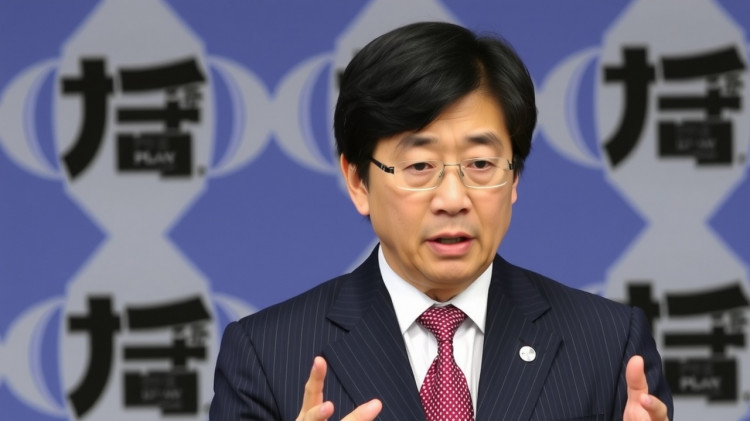
An insider-trading scandal in 2006 brought shame to Yoshiaki Murakami, the founder of Japanese activism
Now that he's back, he's doing what he always did bestshaking things up.
According to MarketWatch, Tokyo is experiencing prosperity once more as the Japanese stock exchange has continued its record-breaking rally, driven by what UBS refers to as the "Takaichi trade." The resurgence of one of Japan's most infamous traders is another indication of the boom, if new Prime Minister Sanae Takaichithe nation's first female prime ministeris another.
A key figure in the Livedoor scandal, which rocked Japan in 2006 when the internet company founded by the flamboyant Takafumi Horie collapsed spectacularly after a share and accounting scam was exposed, was activist investor Yoshiaki Murakami. Murakami was ultimately given a two-year sentence for insider trading shares of Nippon Broadcasting System, which Horie had aggressively attempted to purchase. The Guardian at the time reported that Murakami's downfall was seen as a "victory for Japan's traditional business community," who viewed his "brash brand of capitalism with barely concealed contempt."
Murakami, like Horie, had become well-known as an enfant terrible who was committed to overthrowing established structures "in the search for quick profits." According to Bloomberg, his shame and the broader collapse that followed the 2008 global financial crisis caused "activist investing in Japan to halt." He was known for his "aggressive tactics and fiery language." He departed the nation in 2009 to focus on real estate investments in Singapore.
Murakami is now 66 years old and has returned to his old methods with a new company, City Index Eleventh. He finds a target's weakness and tightens the screws until he achieves his agenda. The most recent is Fuji Media Holdings, another well-known broadcaster that was involved in a sex scandal in January. Prolonged executives resign in shame. Advertisers turned away. When earnings plummeted, Murakami jumped in, acquiring a 16 percent stake and insisting that subsidiaries be spun off to increase the value of the stock. According to Citic Securities, his companies have made 170 billion (841 million) in profit since his investments began to pick up in 2021. In fact, Murakami, his family, and affiliates currently own at least £24.4 billion worth of Japanese stocks, and his two daughters, Aya and Rei, work in the company.
More important, the person who started Japanese activism has contributed to the emergence of a new movement. Last year, the nation saw a record 146 activist campaigns that upended "once-clubby" executive suites and contributed to the recovery of the Japanese stock market.
Following his graduation from the University of Tokyo in 1983, Murakami began working for the Ministry of International Trade and Industry, where he became known for his straightforward communication and financial knowledge. When Murakami started reviewing financial results prior to meetings, he was shocked to see how few executives knew about the company's balance sheet. Instead of investing, they merely adopted the custom of their forebears to sit on cash heaps. He left the civil service, "thinking he could be more effective as an investor," because he was "frustrated by the lack of urgency."
The Marmite persona of Yoshiaki Murakami.
According to the Financial Times, Murakami's detractors criticize him for "using fear as an investment strategy" because he has a Marmite personality. He is regarded by others as a courageous advocate. Bloomberg was informed by one broker that "he's Japanese with a thoroughly Anglo-Saxon understanding of capitalism." "An insider who recognized that Japan needed to change, he turned outsider to bring about that change. Star Magnolia Capital continues, "Murakami's method was straightforward, data-driven, and fundamentally accurate in diagnosing bloated balance sheets and weak governance." Both the media and management teams "portrayed him as a raider" and "saw him as an intruder." However, "the first chapter of modern Japanese activism" was written by him. He undoubtedly intends to write a few more.






Leave a comment on: The first Japanese corporate raider was Yoshiaki Murakami