
We still appreciate the personal touch in a digital age
For Card Factory, which has a distinctive business model that can withstand any economic storm, this is good news.
The timeless appeal of a handwritten card may seem antiquated in a time when digital communication is the norm. However, for Card Factory (LSE: CARD), the top specialty retailer of gifts, greeting cards, and celebration necessities in the UK, this individual touch is the foundation of an unexpectedly strong company. The sentiment of a physical card is still valued by enough consumers to maintain Card Factory's business model in spite of the growth of online cards. When you combine this with inexpensive goods, a consistent cycle of purchases, and an impressive pandemic recovery, you have a business that is not just surviving but thriving.
Even among the undervalued small-cap stocks in the UK, the shares appear to be a good deal despite these attributes, with a price-earnings (p/e) ratio of less than seven. This could be a unique opportunity for investors to purchase a company with strong fundamentals and respectable growth prospects at a significantly reduced cost.
Card Factory is a staple on the high street.
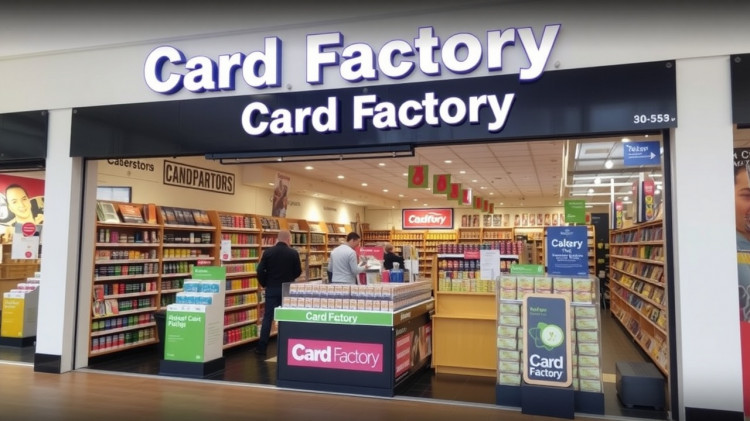
With more than 1,000 locations throughout the UK and Ireland, Card Factory, which was started as a market stall by a Yorkshire businessman in 1997, has developed into a high-street mainstay. Additionally, Moonpig and Funky Pigeon are rivals on its online platform. Its main product line, which includes reasonably priced balloons, party supplies, and greeting cards, appeals to a long-standing cultural tradition. Card Factory's success depends on the fact that many customers still prefer to select and send a physical card, even though online platforms like Moonpig have gained popularity, especially during the Covid lockdowns. An online printed card does not have the same emotional impact as a handwritten note for a birthday, anniversary, or condolence.
The numbers show this preference. Although it is expanding slowly, the UK greeting card market is steady. Card Factory's value proposition, which offers cards for less than £1 and gifts priced to fit tight budgets, guarantees a sizable market share. With in-house design, printing, and warehousing, its vertically integrated business model maintains low costs and strong profit margins.
The business strategy of Card Factory is particularly well-suited to withstand economic downturns. Even with tight household budgets, its inexpensive products are still within reach. Regardless of the state of the economy, consistent demand is guaranteed by the repeatable nature of its products, which are linked to recurrent events like Christmas, Mother's Day, and birthdays. Card Factory benefits from consumers' unwillingness to forgo small, sentimental purchases, even during recessions, in contrast to discretionary retailers selling expensive goods. The company's performance during the most recent economic difficulties demonstrated this resilience.
Card Factory has used targeted price increases and strict cost control to counteract the pressure on margins caused by rising energy costs, freight inflation, and increases in the National Living Wage.
Card Factory's outstanding returns.
Card Factory only really faltered when high-street foot traffic fell during the Covid pandemic. The business suffered a severe blow. Since its 2014 flotation, dividends have been a key component of Card Factory's shareholder-friendly strategy; however, they were halted during the pandemic.
Normalcy returned at the same time as the recovery. Sales exceeded pre-pandemic levels by 2023. Despite remaining below pre-pandemic levels, store transaction volumes have significantly increased thanks to click-and-collect services and high-street foot traffic. Online sales are still much higher than pre-pandemic levels, despite a slight decline since reopening, indicating a long-lasting change in consumer behavior. The most significant indication of Card Factory's confidence in its cash flow and long-term prospects was the company's decision to reinstate its dividend in 2024, declaring an interim payout for the first time in five years.
Card Factory's shares are still incredibly inexpensive for a company with steady revenue and dividend payments, even with this turnaround. This valuation stands out in a UK market full of cheap small-cap stocks, and investors receive a return while they wait for the market to recognize the potential thanks to the high dividend payout.
Card Factory's potential for expansion increases its attractiveness. The company is growing, creating new positions, and improving its web presence. Investors are closely monitoring the financial impact of the recent £25 million acquisition of US-based card retailer Garven, which indicates ambition to tap the potentially lucrative US market. Over the next few years, revenue growth of five to seven percent per year is anticipated due to partnerships like the one with Aldi and an emphasis on more expensive products like balloons and party supplies.
Investments are never risk-free. Due to its reliance on physical stores, Card Factory is susceptible to changes in customer behavior.
Margins may continue to be squeezed by inflationary pressures, particularly in labor and freight, and the company's debt load, although manageable, needs close observation. However, the current valuation appears to more than account for these risks. Card Factory is well-positioned to overcome obstacles thanks to its robust cash flow and diverse revenue stream. Its strength in the market is demonstrated by its capacity to beat rivals during significant trading times, like Valentine's Day.
Despite its lack of glitz, Card Factory's tenacity makes it an alluring opportunity. With revenues above pre-pandemic levels and dividends back on the table, it has recovered from the pandemic quite well. In a market full of inexpensive stocks, the shares are a steal at a historically low valuation with respectable projected growth.
Factory Card.







Leave a comment on: Card Factory is a noteworthy low-cap offering