
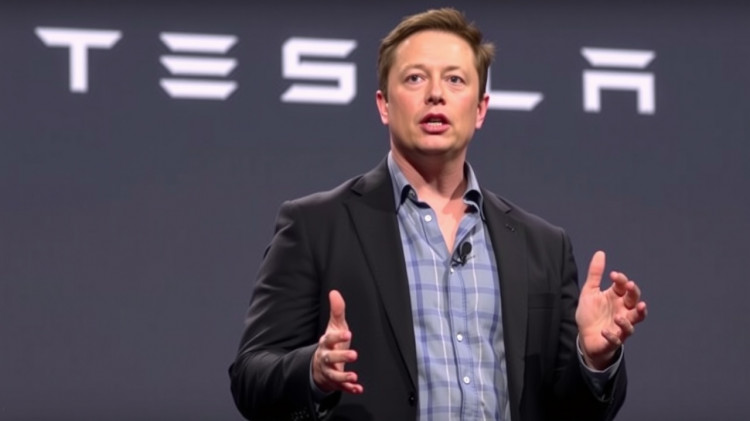
The work environment at Tesla and Elon Musk's other companies has been described by former employees as difficult
Investors who are socially conscious and even those who prioritize finance should have concerns.
High-achieving companies frequently have demanding bosses, but does Elon Musk go too far?
According to a Financial Times report this week, a number of senior employees have departed Tesla in the last year, many of them due to burnout and a dislike of Musk's politics.
"How fast he burns through deputies is the one constant in Elons' world," one of Musk's advisors told the newspaper. In addition to the board's jokes, there is Tesla time. Its work ethic is campaign-style and is 24/7. Not everyone is suited for that.
The company's Optimus robot and artificial intelligence teams, sales, public affairs, and battery and power-train operations are among the departments where the report highlights key departures.
According to a different analysis by Business Insider, during the past year, at least ten of Musk's direct reports have departed Tesla.
Although it fell out of Interactive Investors' rankings in August, Tesla, one of the Magnificent Seven, is often among the best stock choices for do-it-yourself investors on investment platforms.
Are investors in Tesla to be alarmed?
The importance of corporate culture.
In addition to being crucial for the well-being of employees, a strong corporate culture also contributes to low employee turnover and operational stability. The majority of people also think that contented workers are motivated to perform at their highest level.
Tesla's workplace culture has previously raised concerns among investors that it does not support business success. 17 seasoned investors who owned £1.05 billion worth of Tesla stock wrote to the board of directors in 2023 to voice their concerns.
The letter cited sexual harassment and racial discrimination lawsuits to highlight a "toxic culture" at Tesla factories. Additionally, it charged the board with not making sure Musk was sufficiently focused on Tesla.
According to the letter, "the company faces significant legal, operational, and reputational risks, thereby jeopardizing its long-term value," due to the Board's limited supervision of CEO Elon Musk and other crucial facets of corporate strategy, such as the company's approach to labor and human rights.
Additionally, the investors cited persistent issues at Tesla, such as the company's decline in market share, and contended that "poor workplace equity practices are linked to lower returns".
Although it can be hard to measure, research indicates that culture and successful financial performance are related.
A list of the top 100 companies to work for is compiled annually by Fortune, a business magazine in the United States. Data from index provider FTSE Russell shows that over the last 27 years, these companies have outperformed the overall market by a factor of 3.5.
The value of Tesla and Musk.
A successful business must have a strong corporate culture, but Musk has also played a key role in Tesla's success. His unconventional demeanor and contempt for procedure are credited by many with helping Tesla become a disruptive force.
Despite their criticism of Musk's actions, the majority of investors do not want him to resign. They want him to take the initiative.
In May of this year, a group of investors who owned nearly 8 million Tesla shares wrote to the board, requesting that Musk work at the company for at least 40 hours every week. Although the letter was far from flattering, it never implied a resignation.
To keep Musk involved, Tesla is also prepared to spend a lot of money. In September, if he meets specific goals, the board would give him a £1 trillion compensation package over the following ten years.
The news was well received by investors. Although many acknowledge the substantial risk he poses, they still believe he adds value.
In a research note, analysts from Deutsche Bank stated that "the recent focus on Elon Musk's £1 trillion compensation package has eliminated an overhang on the stock." The possibility that Elon Musk would quit Tesla would be greatly reduced if this package were to pass and eventually give him a 25 percent voting stake in the business.
Analysts at Goldman Sachs drawn comparisons between the deal and a comparable (though less profitable) one from 2018. "We believe investors attribute some of Tesla's historical outperformance to the 2018 award, which also set several ambitious operational targets and milestones," the statement read.
Tesla's stock rises.
After a difficult start to the year, Tesla's share price has risen 35% in the last month alone, reflecting the overall positive sentiment surrounding the company. At market close on September 30, this caused the stock to drop to £445, not far from the record high of £480 set in December.
Musk seems to be more focused on Tesla now. Along with the assurance of a substantial compensation package, he showed his faith in the company by buying £1 billion more Tesla shares in September.
But there are still difficulties. Sales of electric vehicles, which account for about three-quarters of Tesla's revenue, have been declining as the company loses market share. Last quarter, deliveries fell 13% on an annual basis.
Does investing in Tesla make sense?
On the basis of ethics alone, Musk's politics and Tesla's workplace culture may be sufficient to turn off socially conscious investors. However, even for individuals who are only interested in the financials, is Musk too much of a liability?
On October 2, it is anticipated that Tesla will release its most recent delivery figures. 448,000 units were delivered in the third quarter, according to FactSet consensus estimates. This would represent a decline of about 3% on an annual basis. Even though this is hardly good news, it is better than the second quarter's 13 percent decline.
Future sales may be boosted by new models, such as the updated Model Y that debuted in European markets in June, according to optimists. Recently, a new model called the Tesla Y L with an extended wheelbase was introduced in China.
With the launch of the robotaxi, Musk is demonstrating his continued focus on automation as well as other aspects of Tesla's business. Depending on your perspective, you may view this as a positive or negative thing.
It may be preferred by those who see Tesla as an electric vehicle company that Musk concentrate on the conventional aspect of the company, which accounts for the great majority of its earnings. The promise of robots, self-driving cars, and the growth opportunities that accompany them may persuade those who view it more as an AI play than an automaker.
There are real-world challenges, even if you support the general automation vision. Musk is well-known for delaying deadlines.
Morningstar senior equity analyst Seth Goldstein stated, "We continue to forecast Tesla's full robotaxi service to launch in 2028, two years behind management's guidance for a 2026 launch." "A robotaxi without any Tesla personnel on board and without geofencing is what we mean by a full launch. Both are currently present in robotaxis under test.
In terms of valuations, investors who purchase at current levels are taking a risk. Tesla's stock is "significantly overvalued," according to Morningstar. Its estimated fair value is £250, while the share price is currently £445. In addition to recommending that shares are overpriced at their current level, Goldman Sachs rates the stock as "neutral" with a £395 price target.




Leave a comment on: Does the high employee turnover at "toxic Tesla" raise concerns for investors?