
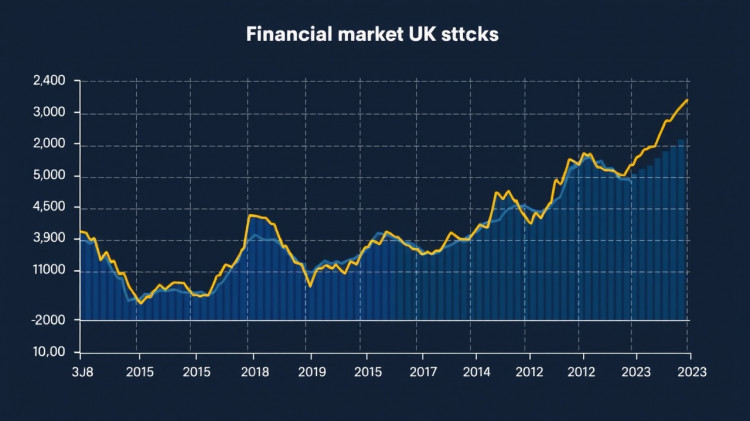
The Schroder Income Growth Fund's manager, Sue Noffke, chooses three UK stocks to invest in
Delivering consistent dividend income and long-term capital growth are the two distinct goals of the Schroder Income Growth Fund. It has increased its dividend annually since its 1995 launch, earning the Association of Investment Companies' coveted "Dividend Hero" badge.
The trust's medium-term objective is to increase income faster than inflation, assisting investors in protecting and increasing their real wealth.
The trust uses a bottom-up strategy to find undervalued opportunities and primarily invests in UK stocks. In order to find businesses with growth potential or where management advancements are underappreciated, its seasoned manager uses a wealth of data from several economic cycles.
The portfolio is diversified by size, style, and sector, which helps it consistently meet its goals by combining holdings that offer high dividends now with those positioned for long-term, sustainable growth. The flexibility and discipline of the trust are particularly noteworthy as sentiment toward UK stocks improves.
Three thriving UK stocks.
A hidden force in the rapidly expanding alternative asset market is Intermediate Capital Group (LSE: ICG). Over the last eight years, ICG has increased its fee-earning assets at an annual rate of 18 percent while operating in robust, growth-oriented markets. ICG is still trading at a significant discount to both its peers and its own history.
Since our initial investment in it in 2011, ICG has completely changed the game for our shareholders. With two-thirds of gains attributable to income, it has generated a tenfold return driven by both capital growth and the compounding effect of increasing dividends.
ICG is our highest-conviction holding, demonstrating our belief in its capacity to continue compounding value well into the future, in addition to being a profitable long-term investment (a "multi-bagger").
The construction and infrastructure company Balfour Beatty (LSE: BBY) has experienced substantial change. The company, which was once renowned for seeking expansion at all costs, was undergoing change when we made our investment five years ago. It has reimagined itself today, focusing primarily on cash flow, profitability, and returns to shareholders.
Renegotiated contracts have improved predictability and decreased risk, and results have been obtained through judicious capital allocation. Balfour Beatty has repurchased more than a fifth of its shares and implemented a progressive dividend policy over the past five years. Stronger earnings, larger dividends per share, and a stronger, healthier balance sheet are the results of this.
Even though the share price has increased in response to these gains, we still anticipate more growth.
Since 2017, Smith and Nephew (LSE: SN), a medical technology company, has experienced several leadership changes, making things difficult. Yet, the company is making genuine progress under Deepak Nath, who took over as CEO in 2022.
His plan to turn things around in three years is gathering steam. Some divisions, like sports medicine and advanced wound management, are growing steadily and profitably, while other divisions, like orthopaedics, have started to recover and margins are increasing.
Improved cash flows from a greater emphasis on innovation, operational effectiveness, and inventory control have allowed for increased dividends and share buybacks for shareholders as well as reinvestment in the company. We believe Smith & Nephew is a company at a favorable turning point, with opportunities for further expansion, having started a position in late 2023 and expanded our exposure since.






Leave a comment on: How to profit from underappreciated British deals that provide growth and income