
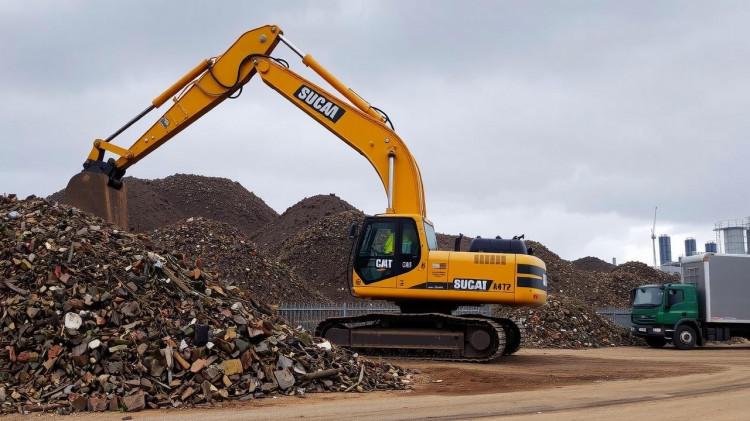
The UK government appears unconcerned with the growing number of factories closing
What's going on?
Another challenging month appears to be ahead for the remnants of Britain's industrial base. We found out on Monday that the largest Olefins and Polymers (OandP) plant in the United Kingdom, located in Grangemouth, Scotland, and owned by Ineos, may be closing. Its CEO cautioned that the facility was unlikely to remain viable for very long due to a combination of rising energy costs and carbon taxes, and that its parent company would not be able to sustain it indefinitely with profits from other sources. In Grangemouth, Ineos has already shut down one refinery.
Vivergo Fuels, the biggest bioethanol producer in Britain and a subsidiary of Associated British Foods, based in Hull, has also stated that it might have to close in September. The Saudi company Sabic, one of the biggest producers of petrochemicals worldwide, announced last month that it would close its Olefins 6 cracker plant in Wilton, Teesside, following 46 years of operation. After 120 years of production, Nippon Electric Glass shut down the biggest fibreglass factory in the UK in June. In March, production at the Vauxhall assembly line in Luton was stopped. The factories in the United Kingdom are closing one by one.
The numbers are startling overall. Since 2021, the chemicals industry's output has decreased by 40%. Since the beginning of the decade, the production of cement has been declining at a rate of 7% annually. According to data from the Society of Motor Manufacturers & Traders, car production has now fallen to levels last observed in the early 1950s. According to the Office for National Statistics (ONS), total output in the "energy intensive industries" has decreased by 35% since 2021 and is currently at a 35-year low. It is disastrous. This kind of widespread industry closure has not occurred in the UK since the early 1980s, during the Thatcher administration.
What's wrong with the industrial base in the UK?
Determining what has gone wrong is easy. Prices for industrial energy have skyrocketed. According to the ONS, the price of electricity has increased by 75% since January 2021, which is devastating for the majority of manufacturing companies, where electricity frequently makes up more than half of total costs. The cost of industrial energy in the UK is currently double that of the US and 50% higher than that of France. Regardless of how efficient they are, manufacturers cannot compete with that kind of cost differential.
A confusing number of green targets and levies have also been imposed by the UK, which further raises production costs. The worst is yet to come. The UK is set to implement higher EU carbon levies as part of the government's "re-set" of relations with the bloc, and they will be charged for their emissions through a complicated system of carbon border credits. Although it might help us reach net-zero, the industry will become even less competitive as a result.
Because of the significant increase in national insurance fees that the chancellor imposed in the most recent Budget, hiring new employees has become more expensive. Although it is much simpler for factories to transition to robots than for retail establishments, some employees are still required, and the cost of all payroll has gone up at the worst possible moment. It is evident that the UK's industrial base is not only disintegrating more quickly, but that government policies are primarily to blame for this.
That is a tragedy. Specialty chemicals, high-end engineering, defense, aerospace, and life sciences make up the majority of Britain's thriving industrial base. These industries all have ample margins, a wealth of experience, and the ability to successfully compete on international markets. It was comparable to other developed nations in that it made up around 10% of GDP. It regularly increased productivity, produced a large number of exports, and created a large number of jobs that were generally better paid and more secure than work in the service sector. It should have had a promising future because it was an essential component of the economy.
Why the government is indifferent is a mystery. Few people are talking about ways to lower energy costs, the public finances are in such bad shape that it is not even worth considering reversing the increase in NI charges, and nobody seems to be even considering easing the net-zero targets. There is no doubt about one thing: a growing number of factories will close throughout the remainder of the year, and no one in the government appears motivated to take any action.





Leave a comment on: Why is the industrial base in Britain disintegrating?