
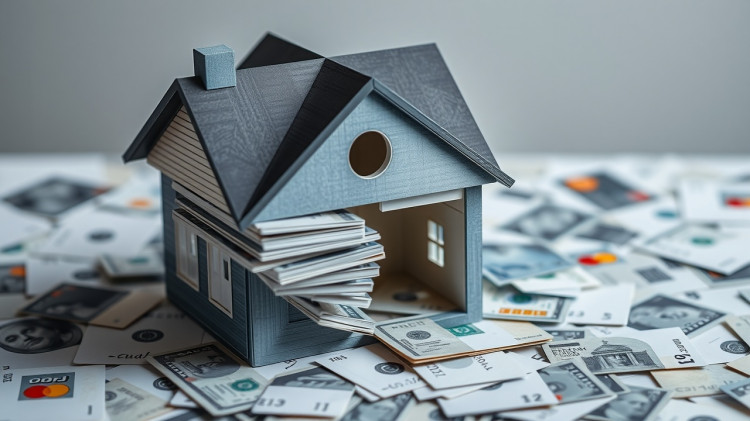
A sudden decline in income could result in severe financial hardship for those who earn more than average because they are already dealing with high debt levels
However, there is a reasonably priced fix.
According to recent research, higher-earning families are playing fast and loose with their finances by accruing costly debt that is frequently borne by a single breadwinner, but there is frequently a straightforward solution to get back on track.
In addition to having more debt than any other income group, the top five earners also have a larger percentage of their debt on costly variable rates than those with lower incomes, and they have very little insurance to cover the repayment of their debt.
High spending is the main cause of all this borrowing; the average monthly household expenses for higher earners' essential housing are 1,439, which is 55% more than the national average.
According to the results of Hargreaves Lansdown's most recent Savings and Resilience Barometer, households with above-average earners tend to be overly dependent on one primary breadwinner and have inadequate insurance, which further precariously affects their lifestyles in addition to their high debt and spending.
Additionally, the top 10 percent of earners pay over half of all taxes, making them a prime target for tax increases in the next autumn budget.
"Your finances could feel bulletproof if you earn more," stated Sarah Coles, head of personal finance at Hargreaves Lansdown. You may be feeling reasonably comfortable because you are more likely to have started investing and to have sufficient savings.
But if you have a single primary provider, significant debt, excessive spending, and inadequate insurance, you'll be much less able to withstand changing circumstances.
How much debt is too much?
Higher earners have a significant amount of debt in their lives. Given how much of their income is used for debt repayment, only about one in ten people (11 percent), according to the HL Savings and Resilience Barometer, have an affordable amount of debt.
Additionally, a larger portion of this debt is on variable interest rate debt, such as credit cards, which normally have higher servicing costs.
Because they are certain they have enough extra cash on hand to cover debt repayments, high earners probably take out more loans. It is also true that people with higher incomes are less likely to be behind on their paymentsjust 1% are.
However, it indicates that they are highly susceptible to shifts in the situation.
The spending patterns of high earners.
A mortgage and other necessary housing expenses account for 17,266 of the 71,947 that high-earning households spend annually on average. It means that, according to Hargreaves' research, they are spending 55% more than the average on necessities.
Their average household income is 80,222, which allows them to pay for their expenses; however, these households would not be able to maintain a positive cash flow for very long if they lost their income.
Risks associated with being the only provider.
The fact that a single person earns a large portion of the household income concentrates the risk, which is not uncommon given high earners' debt and extravagant spending.
A significant breadwinner is relied upon by 71% of the highest earners, according to the Barometer. The entire household would be in financial trouble if something were to happen to them.
Does purchasing insurance make sense?
Insurance serves as both a last resort for high earners and a means of protecting them from the risks associated with other financial difficulties.
Jude Dawute, managing director of wealth manager Benjamin House, stated: "A lot of people with higher incomes have a lot of debt, only have one source of income, and frequently forget about the very thing that keeps their household insurance safe.
According to a Hargreaves study, only 53% of high earners have adequate life insurance to be resilient. Additionally, the study reveals that parents are especially vulnerable, with 49% of parents in the top five earners lacking adequate life insurance.
People frequently think about life insurance as a way to pay off their mortgage after they pass away, but they might not consider a policy that covers the expenses of raising children. According to Hargreaves data, the average life insurance gap for homeowners with children is 194,200, and for households with dependents, it is 89,800.
For homeowners who have at least one child, the average annual cost of filling the life insurance gap is 321 dollars. It may be entirely possible to meet their needs given the other assets that high earners possess.
Dawute stated that "life insurance is a basic must-have" because it pays off debts, replaces lost income, and provides breathing room for dependents.
"Even childless couples ought to think about it, particularly if one of them depends on the other for financial support. Early cancellation locks in a cheaper premium before any health problems arise.
According to Hargreaves Lansdown's data, only half (51 percent) of high earners have critical illness insurance, which pays out a lump sum in the event that you are diagnosed with a specific illness or disability that prevents you from working.
Using data from insurer LV= that showed you are more than four times more likely to die before retirement than to suffer a serious illness, Dawute stated, "Critical illness cover is arguably even more important than life insurance."
"Cancer, stroke, or heart attack are all possible causes that could prevent you from working for months or more," he stated.
You can cover ongoing expenses, take some time to heal, or change your lifestyle without worrying about money if you receive a lump sum payout. Furthermore, it is even more important if you are the primary provider.
"No one is coming to your aid. "Your whole household is protected when your income is protected," Dawute stated.






Leave a comment on: The four financial pain points of high earners and the one easy solution