
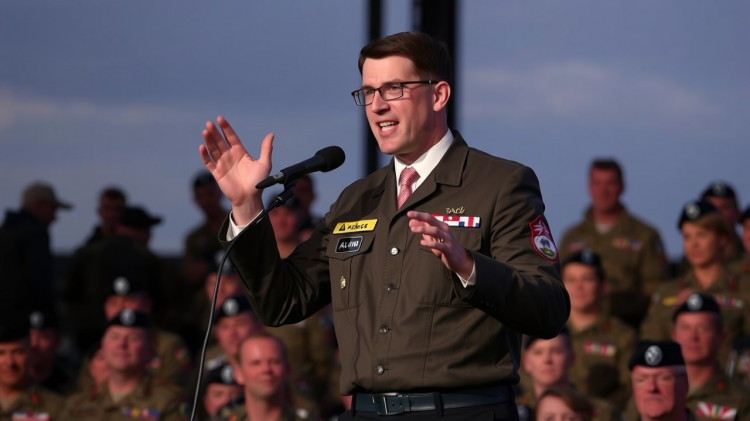
Politicians are telling the public that rising defense spending will boost the economy
Is that true, though?
What is the global increase in defense spending?
According to the Stockholm International Peace Research Institute, nation states' total military spending in 2024 was £2.72 trillion, up 93.4 percent in real terms from the previous year. That brings defense spending to roughly 2.5 percent of global GDP, the steepest annual increase since at least 1988, and the tenth consecutive year of increases. Together, the US, China, Russia, Germany, and India are the world's top five spenders, making up around 60% of global spending. Every part of the world saw a rise in spending last year, but the Middle East and Europe saw particularly rapid expansion as geopolitical tensions increased. While global military spending per capita reached £334, the highest level since 1990, average military spending as a percentage of total government spending increased to 71.1 percent.
In which nations did defense spending significantly increase?
The largest annual increase since the 1967 Six-Day War, Israel's spending jumped 65% to £46.5 billion, making it the second-highest percentage of GDP in the world (after Ukraine's 34%). Iran's spending decreased by 10% in real terms, while Lebanon's increased by 58% to £635 million. At an estimated £80 billion, Saudi Arabia is the largest spender in the Middle East. Real spending is 20% less than it was ten years ago, when the nation's oil revenues peaked, despite a slight increase of 1%. Spending increased by 66 percent to an estimated £5 billion in Myanmar, the largest increase in Asia. In 2024, Japan's spending will have increased by 21% to £55.3 billion, the highest annual increase since 1952. As part of the government's militarized response to organized crime, Mexico's spending increased by 39% to £16.7 billion. Sweden's first year of NATO membership saw a 34 percent increase in spending, reaching £12 billion (2 percent of GDP), in direct response to Russia's growing threat.
How is the remainder of NATO?
Germany is now the largest spender in Europe, with spending up 28% to £88.5 billion, excluding Russia, where spending increased 38% to an estimated £149 billion, double 2015 levels and 7.1% of GDP. In 2024, Poland spent £38.2 billion, or 4.2 percent of GDP, an increase of 31%. Approximately 55% of the global expenditure, or £1,506 billion, was spent by NATO members. The United States continues to be the largest spender in the world, with a 57% increase to £997 billion, or 37% of the global total and 66% of the NATO total. Spending increased by 7% to £314 billion in China, the second-largest spender, continuing three decades of growth.
What about UK defense spending?
It increased defense expenditures by 2 percent to £81 billion, ranking it as the sixth largest spender globally (France ranks ninth with £64 billion). The UK currently spends 23% of its GDP on defense, but last month, under intense pressure from the US, it joined the rest of NATO (apart from Spain) in pledging to increase spending to 35% of GDP by 2035, and then to 5% once additional security-related spending is factored in. Reaching that goal would result in NATO members spending £800 billion more annually than they did prior to Russia's invasion of Ukraine.
Will economic growth be fueled by defense spending?
Politicians tell voters that. There will be "the next generation of good, secure, well-paid jobs" in the defense industry, according to Keir Starmer. "Benefits for all countries" are what the European Commission claims it will bring. According to The Economist, such aspirations are likely to be dashed in reality. Instead, the "most obvious economic consequence of bigger defence budgets will be to strain public finances," which means that growth will not be aided by higher deficits and likely higher interest rates.
Pierre Brianon agrees that military spending has historically been "not a major growth booster" on Breakingviews. According to a recent study by the Kiel Institute for the World Economy, the "fiscal multiplier" is frequently less than one, which means that a one percent increase in military spending results in a short-term GDP increase of less than one percent. Goldman Sachs estimates that the multiplier in Europe is even lower, at 0.5, which means that the region's GDP increases by only 50 for every 100 dollars spent on defense.
So there's no reason to be excited about defense spending?
The source and use of the additional funds will determine any long-term economic effects. Any growth boost will be greater if governments decide to finance it through borrowing rather than higher taxes, which would have a negative effect on growth, claims Ethan Ilzetzki, a professor at the London School of Economics and the author of the Kiel Institute report. Compared to higher-debt countries like Britain and France, low-debt Germany will find this much easier. Furthermore, merely establishing goals runs the risk of wasting money on unimportant projects. Spending on research and development is essential for a significant economic impact because, according to The Economist, "publicly funded innovation often has the effect of spurring private innovation." Research and development spending in the EU currently amounts to a pitiful 4.5 percent of defense spending, while in the US it is 16 percent.
What more can be done to help?
Significantly, increased pan-European integration and cooperation, including with the UK, and a move away from American purchases. Hugo Dixon, also on Breakingviews, asserts that Europe's top priority is to develop its own "strategic enablers" apart from the US. This is military jargon for initiatives like air defense shields, satellite-based intelligence, and a joint command and control system. Since these items are costly and technologically sophisticated, it makes sense to develop them collaboratively. In order to maximize its military and economic benefits, Europe must prioritize its own industry. Currently, over 80 percent of Europe's defense spending is imported, with the US providing three-quarters of this total. "National capitals would need to agree on common strategic needs, pool resources, and continue restructuring the defense sector in order to produce more weapons domestically.




Leave a comment on: Will economic growth be fueled by the surge in defense spending worldwide?