

It is crucial for investors to comprehend the advantages and disadvantages of both active and passive funds, as they have distinct goals
This distinction between active and passive investing is the primary factor that distinguishes various fund types and strategies.
The performance of your portfolio over time will be influenced by the choice of funds you make. The variety of funds available to those who are new to investing or are unsure of the best funds for novices could easily overwhelm them.
When choosing which funds to include in your portfolio and why, it will be crucial to comprehend the distinctions between active and passive funds as well as the benefits and drawbacks of each.
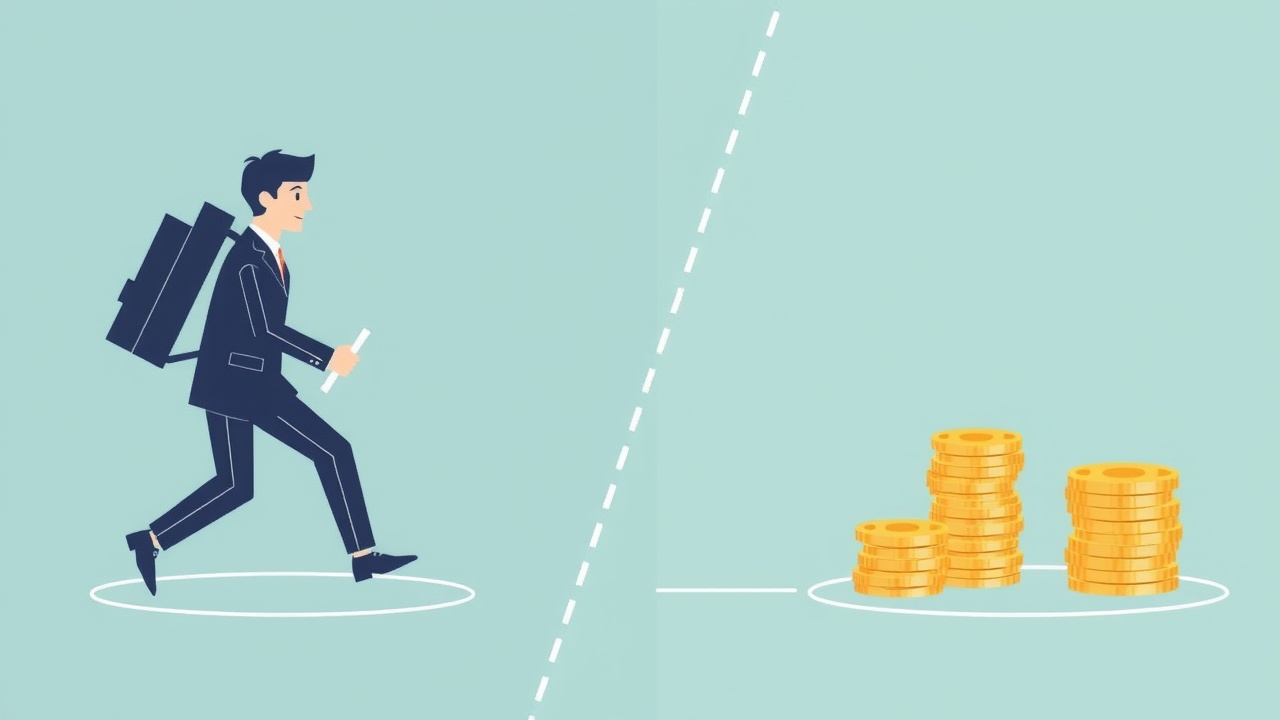
Dan Moczulski, managing director of eToro UK, states that "the key difference lies in how investment decisions are made." While passive investing seeks to keep up with the market, active investing seeks to outperform it.
The total return of the market or industry that passive funds track will be comparable to that of passive funds. Although they may not be exactly the same, returns are nearly always quite similar. Accordingly, investing in passive funds cannot produce returns that are appreciably higher than those of the funds' target market.
The prospect of outperforming the market in terms of returns is at least one advantage of active management. However, there's a catch: active funds may also perform noticeably worse.
What is meant by passive investing?
The purpose of passive funds is to mimic an index's performance.
As a result, they provide investors with exposure to the fluctuations of any particular market or industry.
They are inexpensive, which is one of their benefits. Investors who prefer easy, low-cost stock market exposure are probably going to favor passive funds.
However, because passive funds track the rest of the market, they purchase anything that is rising in value. That may intensify and result in a risk of concentration.
The head of UK retail at Orbis Investments, Matthew Spencer, states that "global indices are heavily concentrated, with around 70 percent in US equities and more than 20 percent for big tech." The MSCI World Index is one example of a passive global equity tracker in which investors are exposed to a smaller portion of the market than they may realize.
Active investing: what is it?
In an effort to keep their portfolio outperforming the market, active investors take a more hands-on approach, trying to buy and sell specific investments at the right times. Active funds typically use a benchmark, or comparable passive index, that represents their market or industry to compare their performance to and attempt to beat it.
Agility is key to active investing, according to Moczulski. "When storms come, a competent manager can duck into cash or strong defensive sectors, tilt the portfolio toward tomorrow's winners, and spot assets at an attractive price.
Because actively managed funds require more work and expertise from their fund manager, they typically charge higher fees than passive funds.
Nevertheless, an active fund manager's performance may not surpass their benchmark. Actually, they frequently perform poorly.
Do you want to purchase active or passive funds?
In a perfect world, active investors would purchase assets at a discount and sell them at a premium. They produce higher returns in this manner than would be possible with a simple stock market purchase at any given moment. However, that is easier said than done.
Active funds typically perform worse than their passive counterparts. For instance, according to Morningstar data, only 42% of US-based active mutual funds and exchange-traded funds (ETFs) outperformed their asset-weighted passive counterparts in 2024, compared to 47% in 2023.
Choosing a manager who produces results in exchange for higher fees is crucial if you plan to purchase active funds.
"Active management is a zero-sum game," Spencer asserts. "While some managers contribute value, others do not."
According to Spencer, two important indicators of a good active manager are a portfolio that deviates significantly from the benchmark and a track record of success in stock selection.
Both active and passive fund examples.
Consider including these three passive funds in your portfolio.
Vanguard FTSE 100 UCITS ETF (LON:VUKG); UBS SandP 500 Index Equity Fund; Fidelity Index World. These three active funds each have a dedicated portfolio manager who makes decisions about which shares to purchase and sell.
Artemis Global Income, Orbis Global Balanced Fund, and Fundsmith Equity Fund. The majority of investment trusts are actively managed, like Scottish Mortgage (LON:SMT), which makes investments in both public and private technology companies.
What are active and passive investing's benefits and drawbacks?
In summary, the following are the advantages and disadvantages of active and passive investing.
When it comes to your own investments, should you be active or passive?
Although the term "active versus passive investing" usually refers to fund managers' tactics, it's also important to consider how you handle your own portfolio. Do you want to take a more active approach to choosing when to buy and sell, or are you content to be a passive investor who buys and holds, with your investments increasing in tandem with the overall market?
That question ultimately boils down to personal preference and unique situation. However, there are a few things to think about when choosing how to approach your investment strategy.
Active investing requires a greater amount of effort. It at least necessitates that you periodically assess your portfolio and choose which assets to purchase and which to sell. Ideally, you would conduct extensive research to help guide these choices, which takes even more time.
Additionally, you ought to find out how much your broker charges for transactions. Trades in and out of your portfolio will incur fees on many investment platforms, which could add up if you're following an active investing strategy.
Lastly, we've seen that even experienced active fund managers frequently fall short of outperforming the market. Given your limited time and resources, there is no guarantee that you could accomplish this.
The well-known saying "time in the market beats timing the market" can be interpreted as a tacit endorsement of passive investing over active investing, as it suggests that allowing your investments to compound over time will typically yield higher returns than actively attempting to determine when to buy and when to sell.





Leave a comment on: What makes passive investing different from active investing?